2025 · Archive
Archive
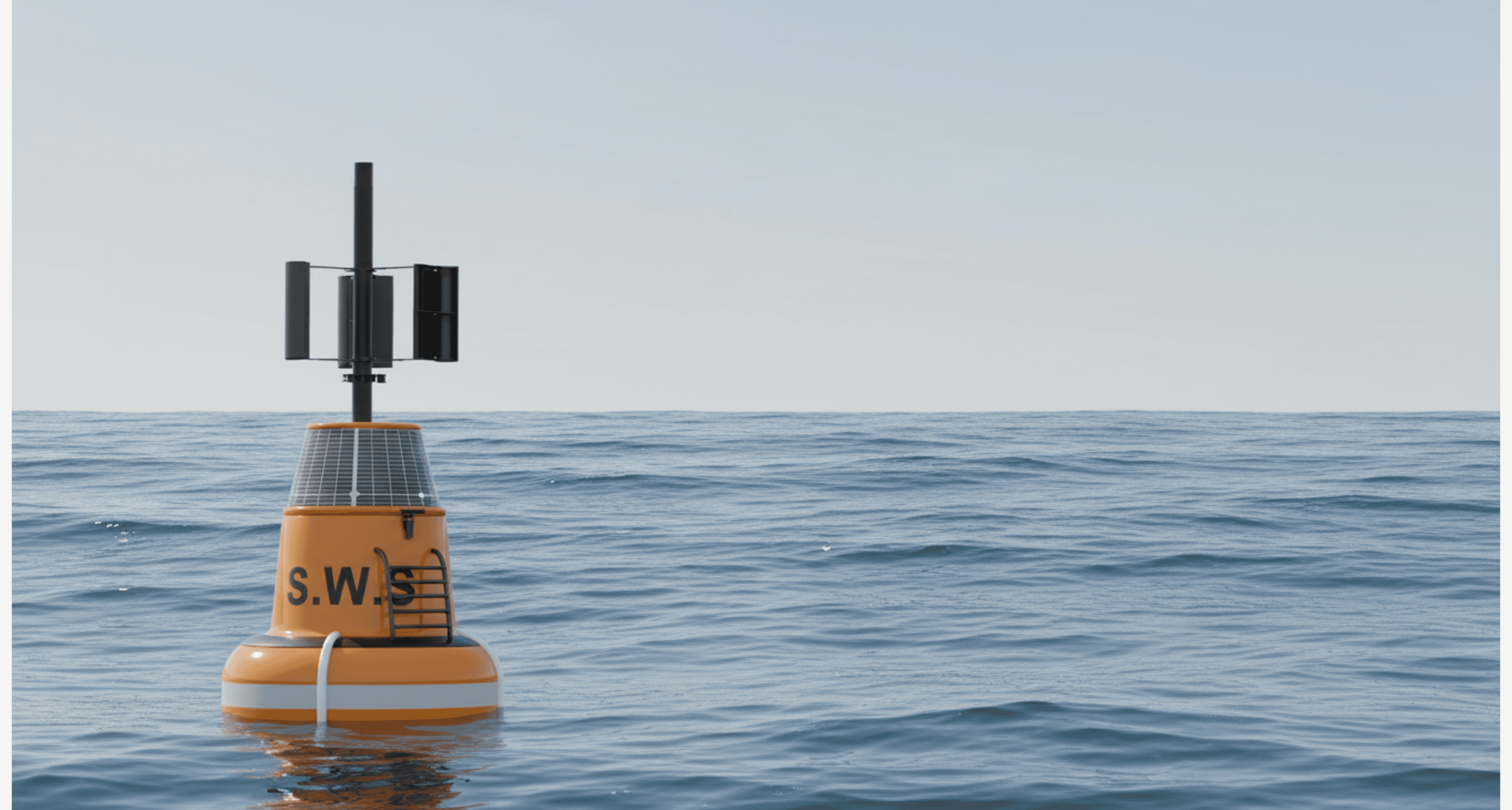
12-ft rotomolded ocean buoy engineered for harsh marine deployment.
Sketches
Hull and mast forms, explored by hand.

Form studies in two rows.

Three forms, drawn larger.
T.I.D.E.
Telemetric Integrated Data Environment · all-weather oceanographic platform
A 12-foot meteorological buoy that has to keep reporting through storm seas, salt spray, UV, and ice. Unattended, with no one aboard to service it.

Concept brief
An advanced maritime weather station built around a monolithic, rotomolded HDPE shell. It is made to survive extreme oceanic environments while cutting long-term maintenance cost.

Benchmarked against NOMAD and Workhorse
Competing buoys are heavy, costly to service, and assembled from many welded or fastened parts. A one-piece rotomolded HDPE hull keeps the seam count low and the service interval long.

Who it is built for
Two archetypes drove the brief: Dr. Aris, a researcher who needs trustworthy long-term data, and Marcus, a deployment technician who needs the unit to be fast and safe to handle on a boat deck.

Power and sensing payload
Solar panels and a wind turbine keep the station charged. LiDAR and a data logger record conditions, and foam insulation protects the electronics from cold.

Built for the Arctic
Rotomolded HDPE stays tough in cold, and the insulated shell keeps the electronics running through ice. Safety Yellow and matte black keep the buoy visible to vessels.

Refinements for real deployment
Grip texture for wet gloves, an airtight latch, and recovery rails make the buoy easier to handle, seal, and retrieve at sea.

Rotomolding
Zinc die-cast
Maritime
All-weather